How a Two-Sided Healthcare Marketplace Won a Stevie Award and Scaled Clinic Bookings by 52%
32% increase in new clinic sign-ups. 52% increase in appointment bookings via the platform. 37% increase in unique visitors to the platform.
Project Overview
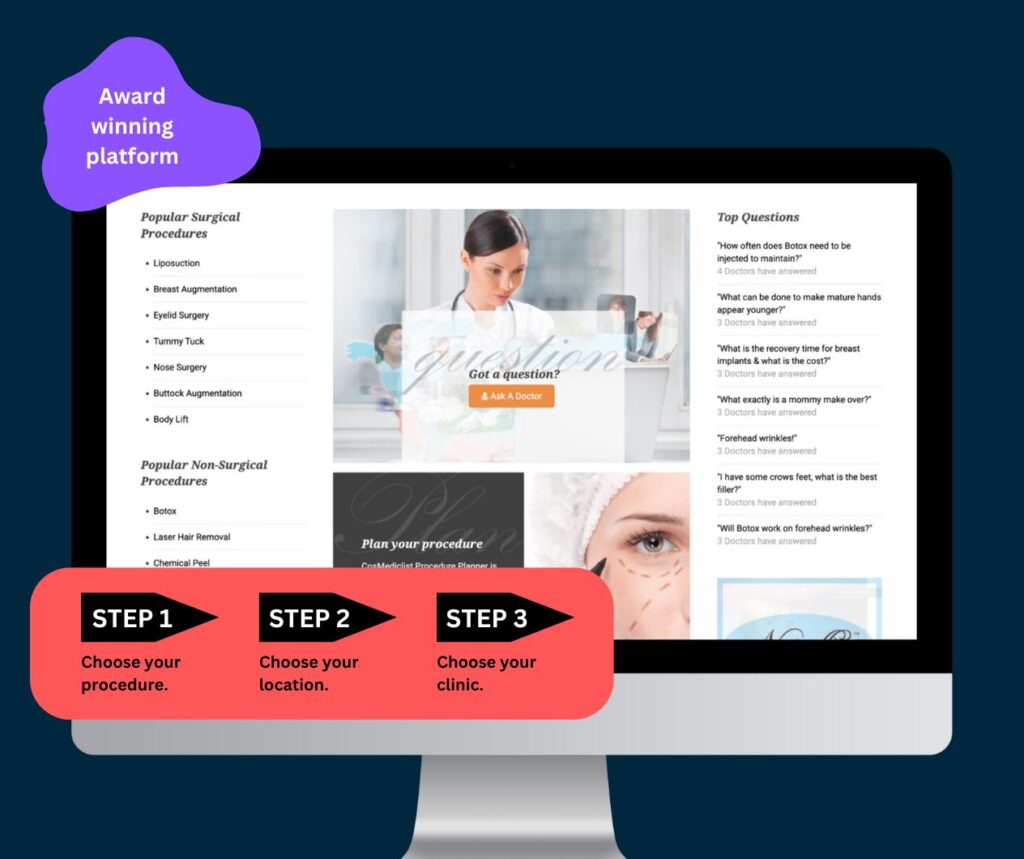
CosMedicList was built to solve a genuine gap in the cosmetic medical space across North America. Dermatology clinics and cosmetic practices had no dedicated, structured platform to market their services to patients who were actively researching treatments. On the other side, patients had no reliable, centralized place to research procedures, compare clinics, and book appointments with confidence.
The mandate was clear: design and develop a multi-sided platform that served both audiences equally well, without compromising the experience of either. The result was a marketplace that gave clinics a scalable marketing channel and gave patients an intuitive research and booking tool, all within a single cohesive platform.
The platform went on to win the Bronze Stevie Award for Best New Product or Service in 2015.
The Challenge
Building a two-sided marketplace in healthcare comes with a specific set of pressures. The platform had to earn trust on both ends simultaneously. Clinics would not invest in listings unless there was genuine patient traffic. Patients would not engage unless the clinic data was rich, credible, and easy to navigate. Getting that balance right from launch required a strategy that addressed both user groups from the ground up, not as an afterthought.
Beyond the chicken-and-egg growth problem, the cosmetic medical space carries an added layer of complexity. Patients making decisions about invasive or semi-invasive procedures need more than a directory listing. They need context: what does a treatment involve, what is the recovery like, what are the realistic risks? Without that educational layer, the platform risked becoming just another listings site with no real stickiness or patient value.
The technical requirements were equally demanding. The platform needed a flexible listing architecture that could support both free and premium clinic profiles, a robust search and filtering system built around location and specialty, a procedure library with structured content, and a booking flow that minimized drop-off.
Success Outcome
| Result | Metric |
|---|---|
| 32% increase in new clinic sign-ups | Year one |
| 52% increase in appointment bookings via the platform | Year over year |
| 37% increase in unique visitors to the platform | Year over year |
| 4.5 out of 5 average rating | User satisfaction surveys |
Strategic Approach
Designing for Two Audiences at Once
The foundational strategic decision was to treat clinics and patients as two distinct user groups with separate but interdependent goals, and to design the information architecture around both simultaneously.
For patients, the priority was reducing friction at every stage of the research and decision-making journey. That meant building a search experience that surfaced relevant clinics quickly, presenting clinic profiles in a format that made comparison effortless, and structuring procedure content in a way that was thorough without being clinical or intimidating.
For clinics, the platform needed to function as a genuine marketing channel, not just a passive listing. That meant giving them tools to present their practice professionally, differentiate through premium features, and track the value they were getting from the platform.
Tiered Listing Structure
A core part of the business and product strategy was the dual listing model. Free listings gave clinics a low-barrier entry point to establish a presence on the platform, which was critical for driving early supply-side growth. Paid listings offered enhanced visibility through premium placement, multimedia galleries, and additional profile features that allowed clinics to stand out in competitive markets.
This tiered structure served multiple goals. It kept the directory comprehensive and well-populated from early on, while creating a clear upgrade path with demonstrable value for clinics that wanted greater reach. It also gave the platform a sustainable revenue model tied directly to clinic success.
Building the Procedure Library as a Strategic Asset
The procedure library was not treated as a content marketing exercise. It was built as a core product feature and a primary driver of organic search traffic. Each procedure entry was structured to answer the questions patients consistently ask before booking a consultation: what the treatment involves, realistic recovery timelines, pain scales, risks, and aftercare requirements.
This depth of content served two functions. First, it brought in top-of-funnel traffic from patients in the research phase, before they were ready to book. Second, it created a natural pathway toward clinic discovery and appointment booking as those patients moved through the decision-making process. It also positioned the platform as a credible, authoritative resource in the space, which supported both patient trust and clinic confidence in the listing product.
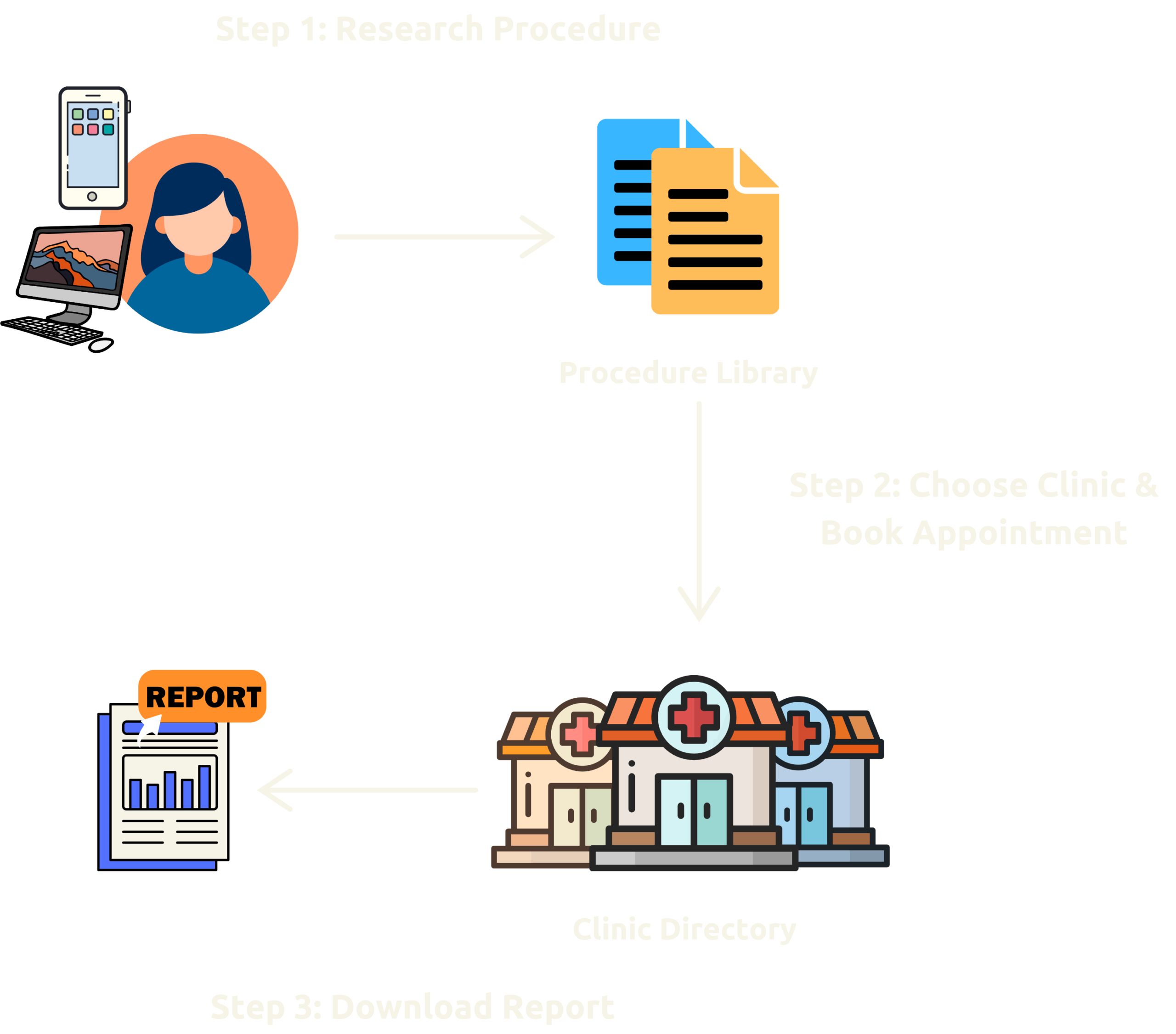
Figure A: User journey
UX and Prototyping Process
The prototyping phase was driven by a clear brief: the platform had to feel effortless to navigate for a user who may have no prior knowledge of cosmetic procedures or how to evaluate a clinic. That shaped every UX decision, from the search and filter logic to the layout of clinic profiles.
Advanced filtering by location, treatment type, and ratings was built to deliver precise results without overwhelming users with options. Clinic profiles were structured to present credentials, services, and patient reviews in a hierarchy that supported quick scanning and deeper reading depending on what the user needed.
The booking flow was kept deliberately lean. Every additional step between a patient finding a clinic and requesting an appointment was treated as a potential drop-off point. The goal was to reduce that friction as much as architecturally possible while still collecting the information clinics needed to manage their appointment pipeline.
For clinics managing their own profiles, the backend was designed to be approachable for practice managers and front-desk staff, not just marketing teams. The ability to update services, add imagery, and manage their listing without technical support was a deliberate product decision that improved adoption and profile quality across the directory.
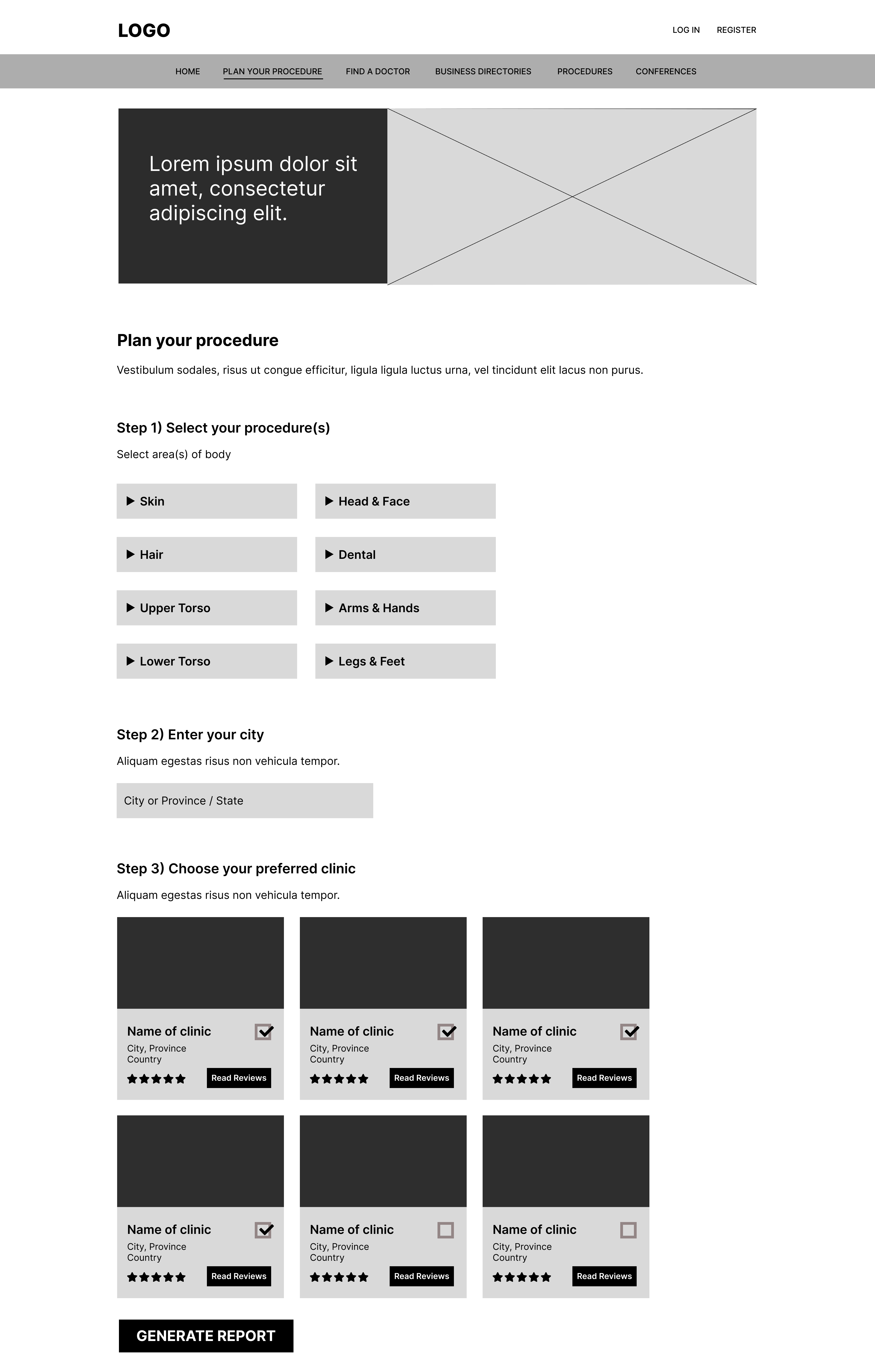
Wireframes of CosmedicList platform showcasing the plan your procedure steps.
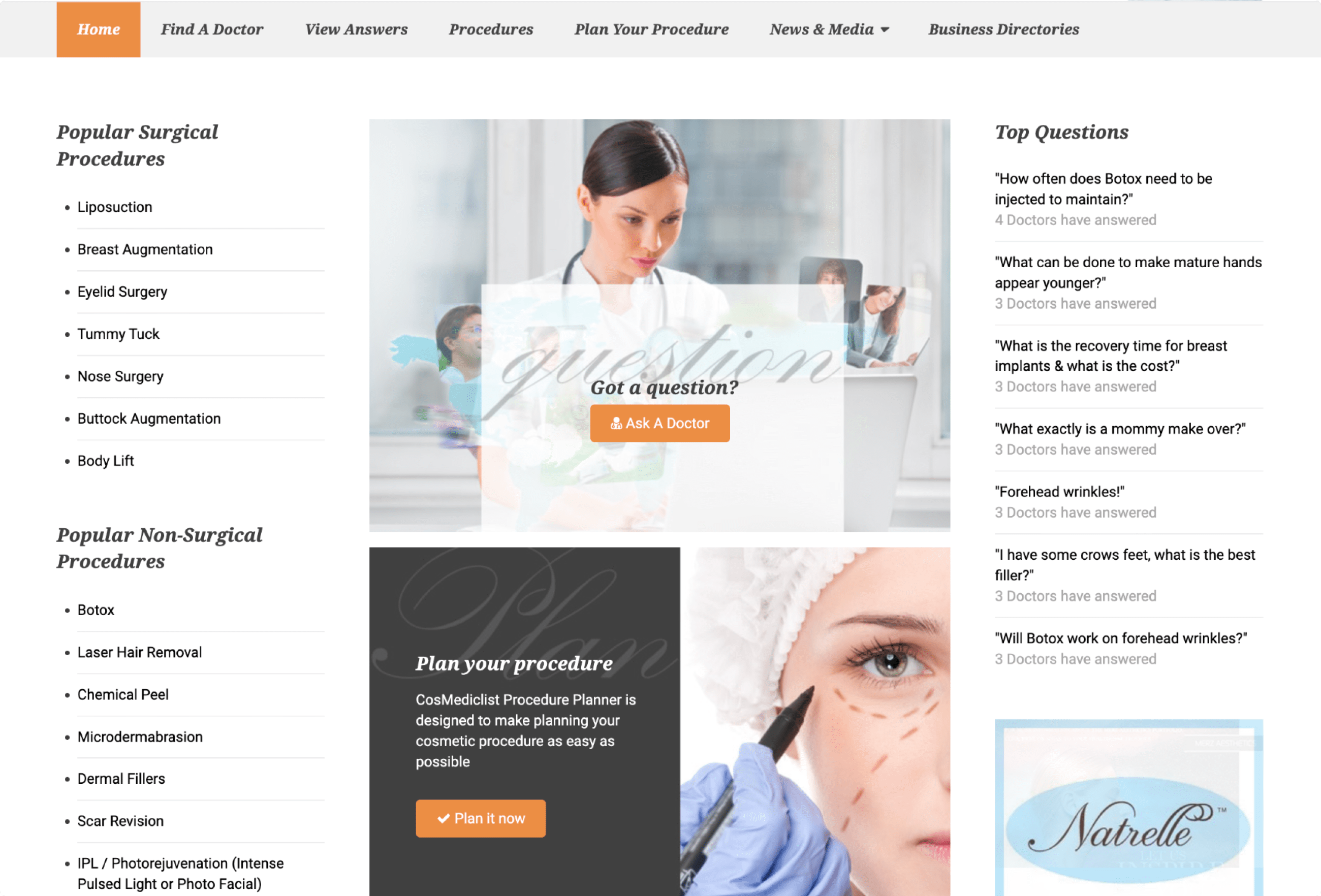
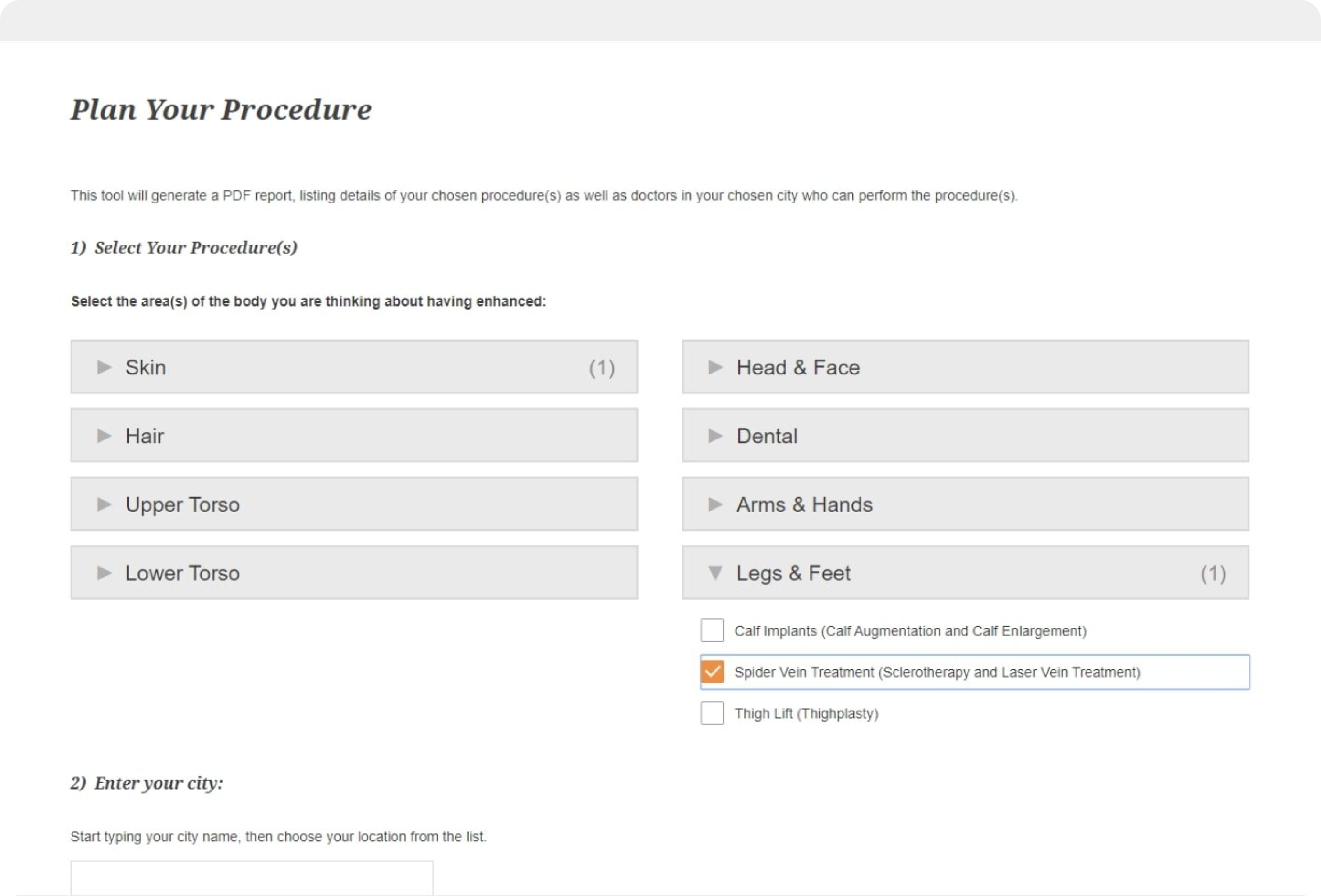
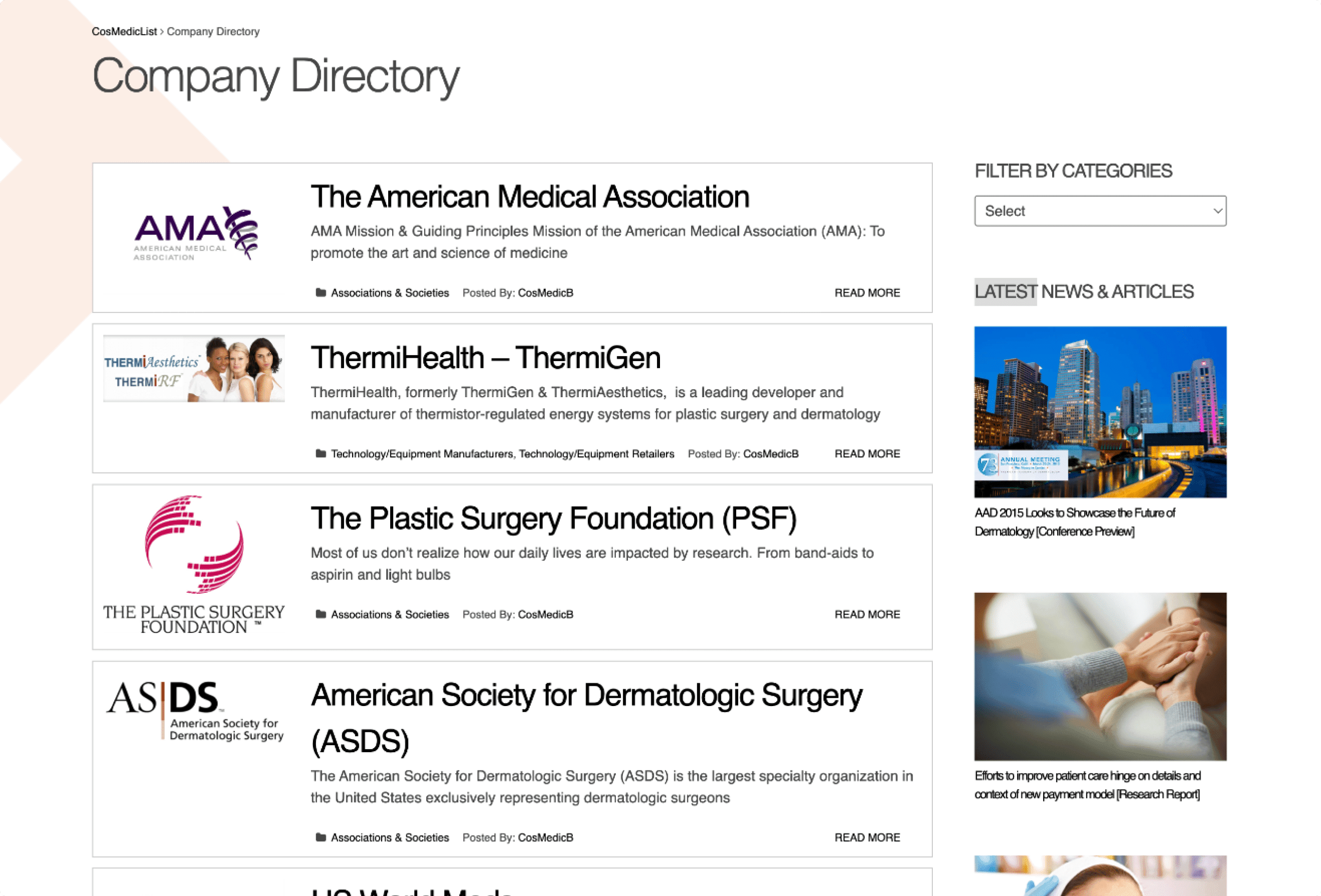


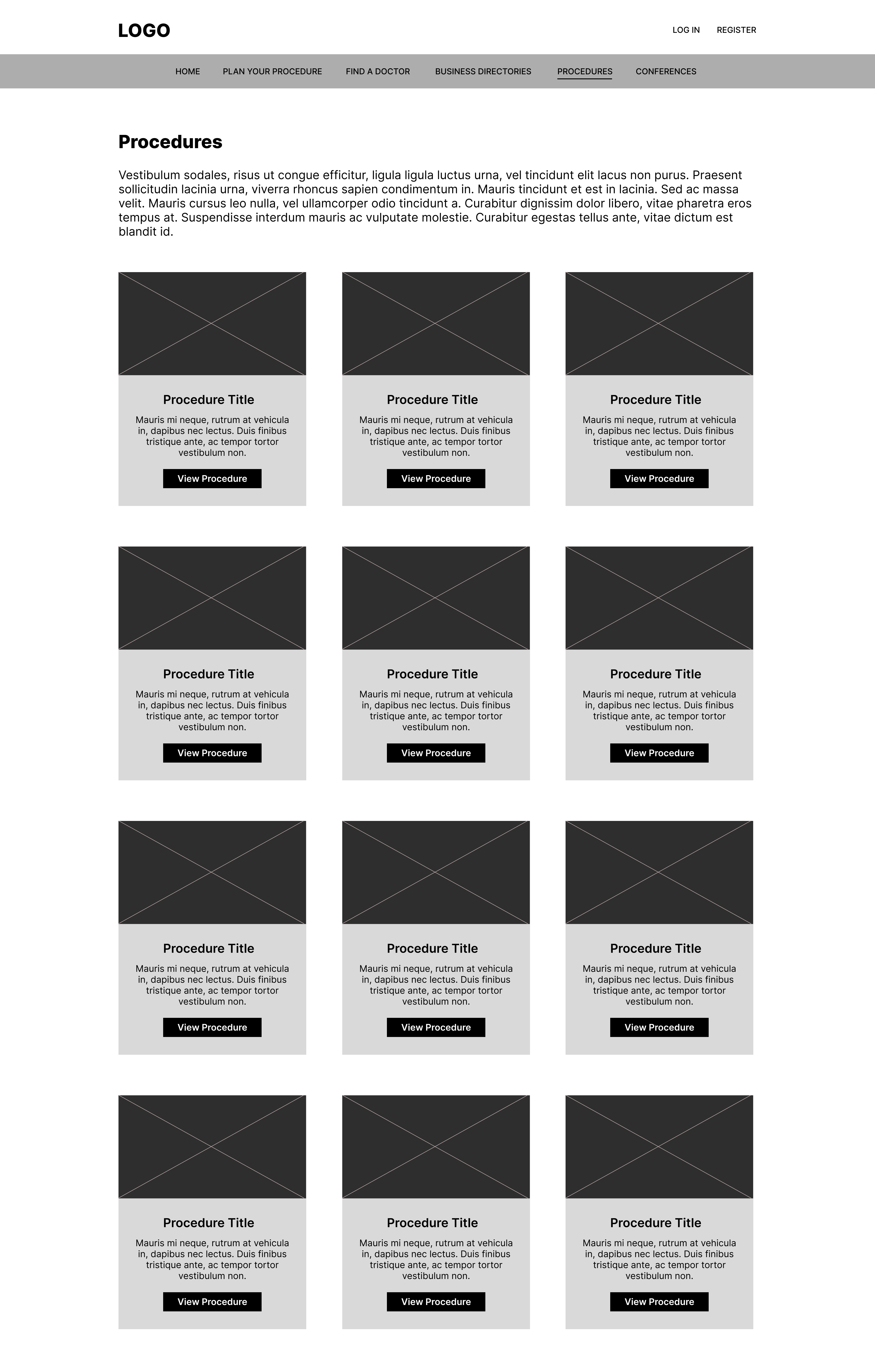
Final design of CosmedicList platform - Desktop and mobile.
What Drove the Results
The 52% increase in appointment bookings did not come from a single feature. It came from the compounding effect of a well-structured search experience, a booking flow with minimal friction, and clinic profiles with enough depth and credibility to convert researching patients into booked appointments.
The 37% increase in unique visitors was largely driven by the procedure library strategy. Structured, search-optimized content brought patients into the platform during the research phase, creating a pipeline that the clinic directory and booking functionality could then convert.
The 32% growth in clinic sign-ups reflected the strength of the tiered listing model. The free entry point kept acquisition friction low, while the visible performance of premium listings gave clinics a concrete reason to upgrade.
The 4.5 out of 5 satisfaction rating across both user groups confirmed that the dual-audience design approach held up in practice. Patients found what they needed. Clinics saw real returns on their investment in the platform.