How a SaaS Marketing Pipeline Tripled by Fixing the Form-to-Sales Handoff
50% Reduction in lead response time. 25% Improvement in user engagement. 20% Increase in customer acquisition rate.The Problem Worth Solving
Most SaaS companies leak revenue at the same place: the moment a lead fills out a form and then waits. That gap between submission and first contact is where interest cools, competitors step in, and pipeline momentum dies.
The client came to me with a familiar set of symptoms. Their lead generation forms were collecting data, but the handoff to sales was slow and inconsistent. There was no way to book time directly, no automated follow-up cadence, and no reliable view into what happened between form fill and closed deal. Bounce rates were climbing, meeting bookings were flat, and the sales team was spending too much time chasing cold leads that had already moved on.
The core issue was not the volume of traffic. It was the friction in the conversion path.
The Strategic Objective
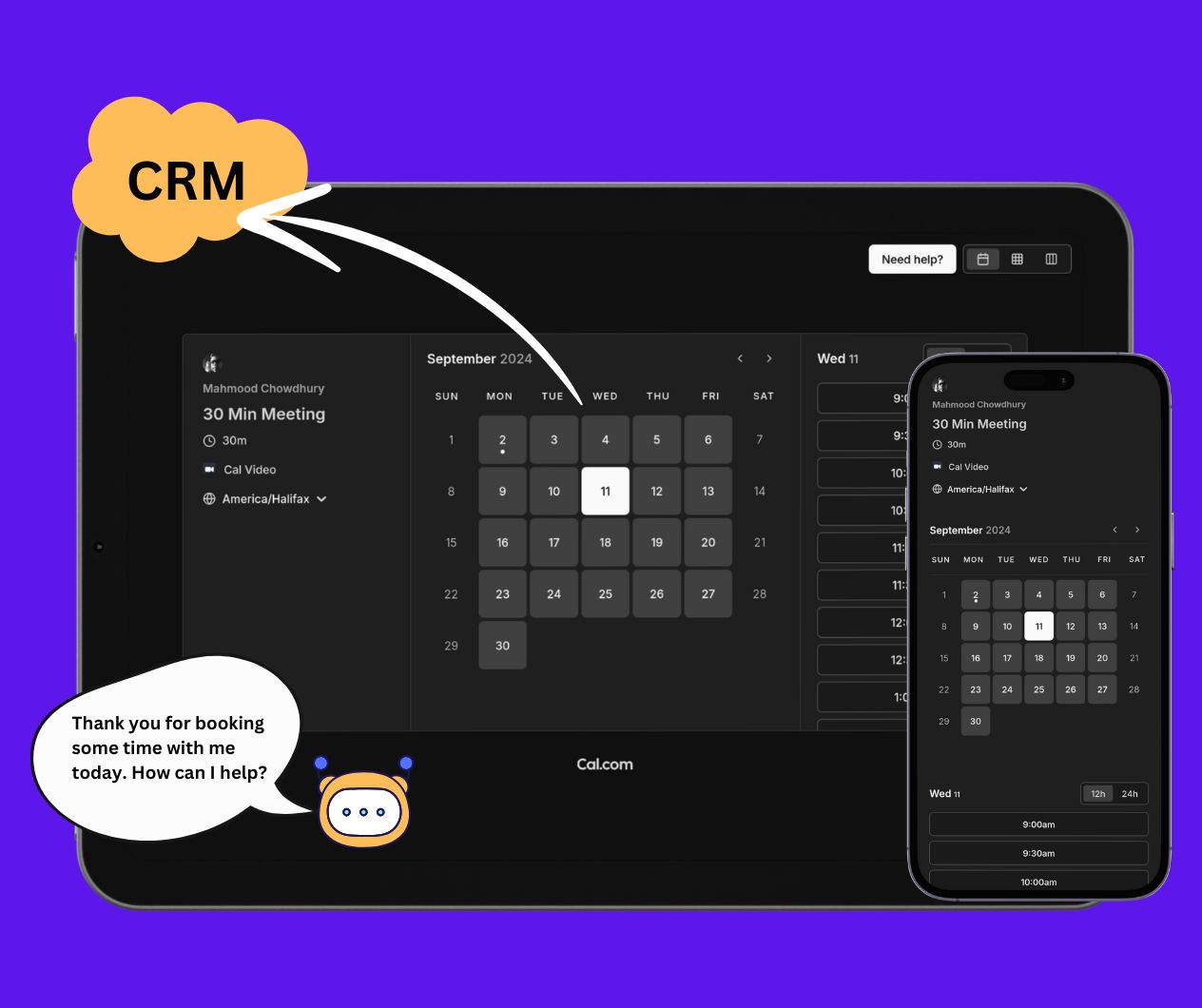
The goal was clear: compress the time between intent and action. When a prospect fills out a form, they are at peak interest. Every hour that passes without a response is a compounding loss. The strategy centered on removing that gap entirely by letting prospects book meetings directly within the lead generation experience, then feeding that data automatically into the CRM so sales had full context before the first conversation.
This was not about adding more tools. It was about connecting the right ones in the right sequence and designing a flow that felt effortless to the prospect.
The Outcomes
- 3x Marketing Pipeline Growth in 8 months
- 50% Reduction in lead response time
- 25% Improvement in user engagement
- 20% Increase in customer acquisition rate
The Build
Booking Platform Integration
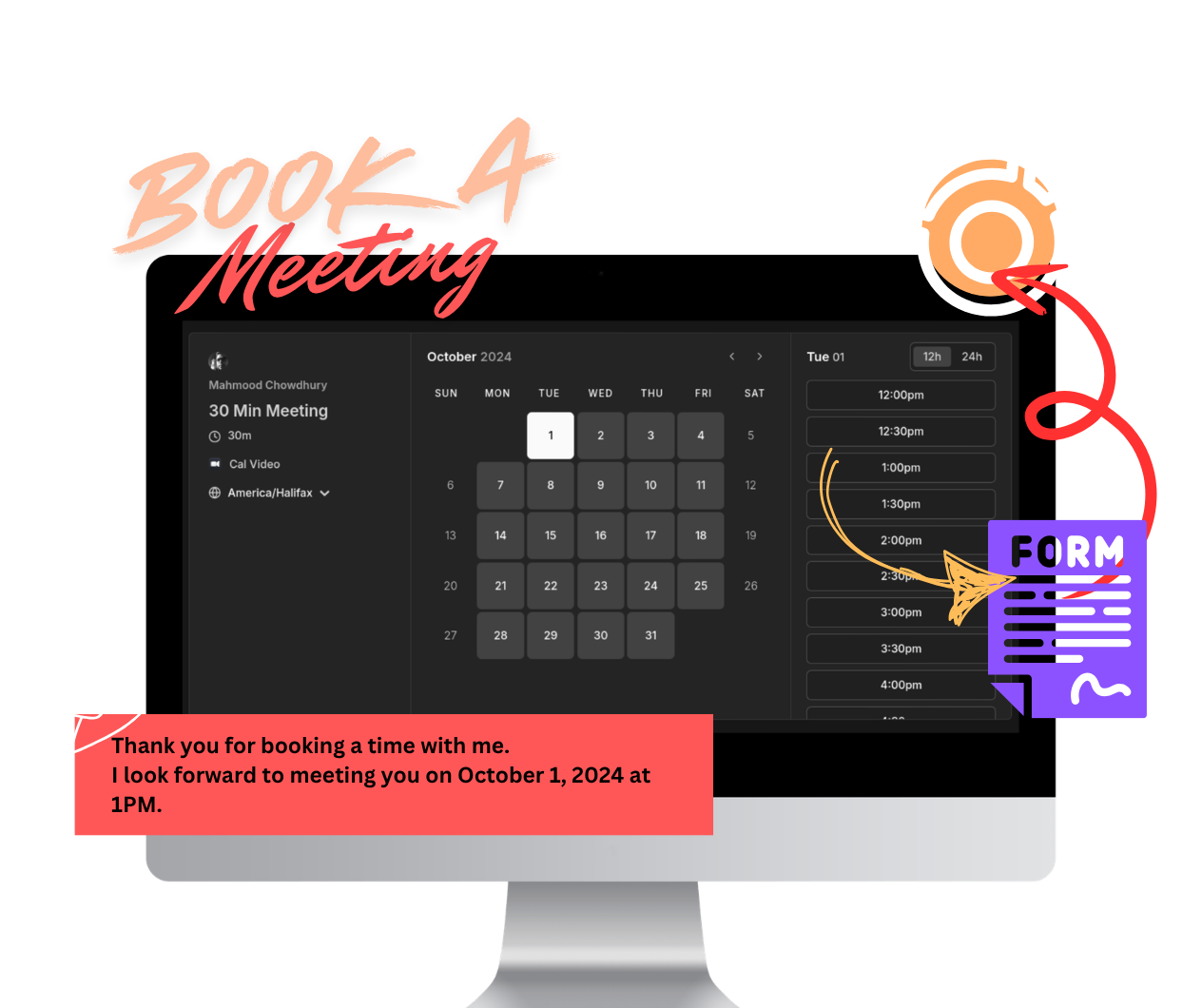
The lead generation forms were rebuilt to include direct scheduling through Cal.com and Calendly. Prospects could choose between a phone call or video meeting, select a time slot in their own time zone, and confirm a booking without ever leaving the page or waiting for a reply.
Automated confirmation emails and reminder sequences were configured within both platforms, ensuring that booked meetings had strong show rates and that prospects stayed engaged in the window between booking and conversation.
The result was a complete elimination of the "we'll be in touch" lag that was costing the client opportunities every single week.
CRM Integration and Pipeline Visibility
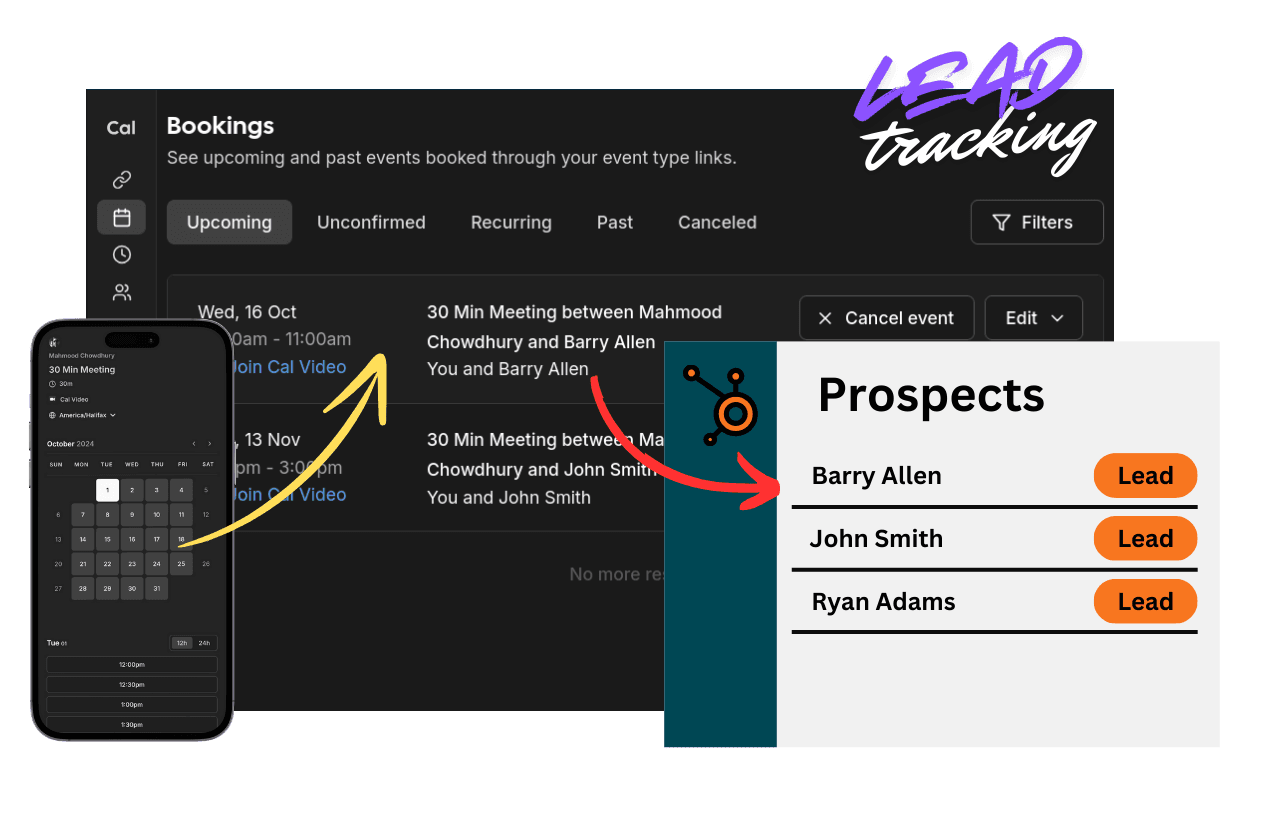
Booking data flowing from Cal.com and Calendly was connected directly to Salesforce and HubSpot through native and webhook-based integrations. Every booked meeting created or updated a contact record automatically, tagged the lead source, and triggered a workflow for the sales team.
This gave sales reps full context before getting on a call: where the lead came from, what page they converted on, and what meeting type they booked. Automated follow-up tasks and nurture sequences fired based on meeting outcomes, keeping the pipeline moving without manual intervention.
For the first time, the client could see the full arc of a lead's journey from first touch to closed deal, and measure where the drop-offs were happening.
User Journey Design and Prototyping
Before any of the integrations were built, I mapped the full user journey from the ground up.
I pulled behavioral data from the existing analytics setup, reviewed CRM records for patterns in how leads moved through the funnel, and identified the specific moments where prospects were dropping off or losing momentum. From there, I built detailed personas for the two primary lead segments and mapped their paths from awareness through conversion.
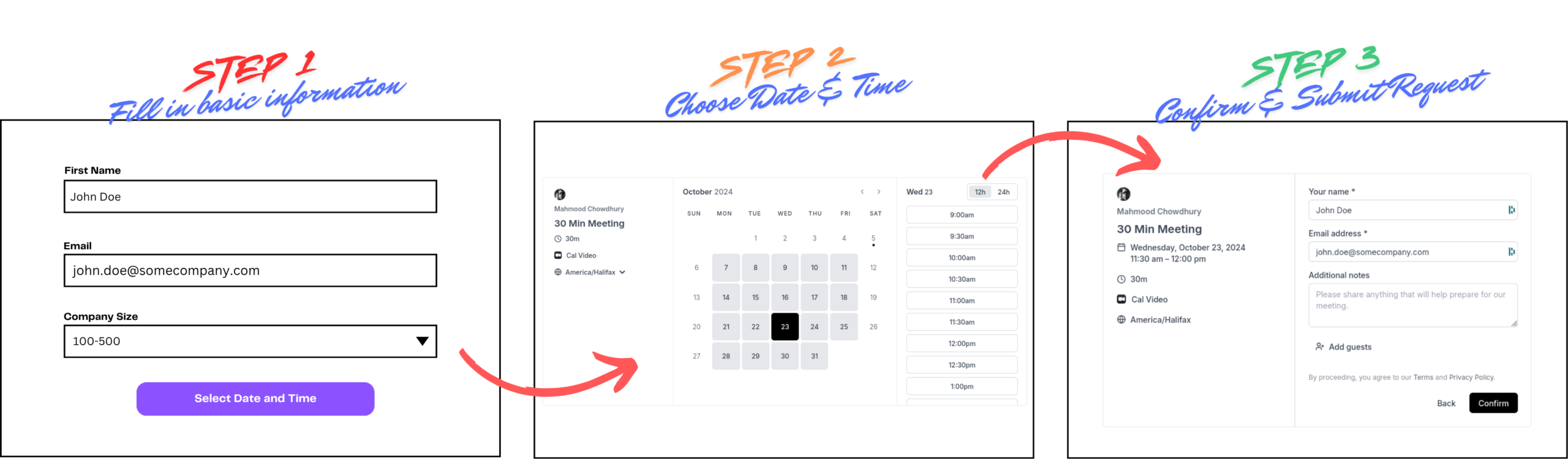
With the journey mapped, I moved into wireframing. The goal was to surface friction early and solve it in the prototype stage rather than after development. I used Figma to build low-fidelity wireframes covering each critical touchpoint: the landing page, the lead form, the booking interface, and the post-booking confirmation experience. These were shared with stakeholders early and tested for comprehension and flow before any high-fidelity work began.
The wireframes also included a detailed lead flow diagram showing how traffic from organic search, paid campaigns, and social referrals would hit the landing page, move through the form, trigger the booking interface, and route into the CRM on submission.
Once the core flow was validated, I developed high-fidelity prototypes that brought in the client's visual language. I paid close attention to UI clarity: reducing clutter, tightening the visual hierarchy on the form, and adding small interaction details like inline confirmation states and button animations that gave users confidence they had completed each step correctly.
A/B Testing and Optimization
With the new flow live, I ran structured A/B tests on the components most likely to move the needle: form layout, call-to-action copy, button placement, and the scheduling interface presentation. Each test had a clear hypothesis and a defined success metric tied to booking rate or downstream pipeline value.
The results shaped several rounds of iteration. Some of the biggest lifts came from the smallest changes: a single-column form layout significantly outperformed a two-column layout on mobile, and a more direct CTA reduced hesitation and improved click-through to the scheduler.
Post-launch monitoring through Google Analytics and Hotjar gave me a continuous feedback loop. Heatmaps and session recordings surfaced friction points that structured tests did not catch, and those findings fed back into further refinements over the following months.
What Made the Difference
The outcomes here were not the product of any single tactic. The 3x pipeline growth came from treating the lead flow as a complete system rather than a collection of individual components.
Integrating booking platforms was valuable, but only because the form design was built around the scheduling experience, not retrofitted to accommodate it. The CRM automation was effective because the data architecture was defined before the integrations were built. The testing program produced meaningful results because the baseline flow was already well-designed and the tests were measuring specific, meaningful variables.
Every piece of this project was sequenced deliberately. That sequencing is what turned a collection of capable tools into a growth system.